
Strategy consulting
Circular economy
OUR
EXPERIENCE
Do Well Do Good supports organizations in embedding circular economy principles at all levels—strategy, operations, and value chains. Our engagements span the development of strategic roadmaps, the design of circular business models, and the implementation of financing solutions—enabling our clients to reduce resource consumption, maximize material value, extend product lifecycles, and close material loops.
Our flagship projects include: a technical and procurement assessment of bio-based plastic alternatives in the automotive sector; a multi-country opportunity study on biomass valorization and energy production across 13 African countries; and a market analysis of automotive electronic component repair and remanufacturing in Europe and the United States.
TRANSVERSE

Strategy
We support organizations in the definition and deployment of circular economy strategies, by activating closed-loop models, waste reduction, and levers for sustainable value creation.

Finance
We advise on circular economy financing, by mobilizing capital to support sustainable innovations and aligning financial flows with long-term sustainability objectives.
BUSINESS MODELS CIRCULAIRES

Réduire
We support our clients in reducing resource consumption and waste through eco-design and process optimization, strengthening environmental efficiency across the entire value chain.

Réutilisation/ Récupération
We design reuse and valorization systems based on closed-loop supply chains, in order to extend product lifecycles while reducing environmental impact and costs.

Réparer
We support our clients in defining repair strategies aimed at extending product lifecycles and activating service-based models that create value and sustainable performance.

Recycler
We design high-performance recycling systems that enable material loop closure, from design for recycling to advanced recovery processes, in support of circular supply chains.
Our latest publication
Accelerating the B2B circular economy in Europe
In response to challenges related to resource sovereignty and decarbonization, Do Well Do Good’s white paper sets out six recommendations to accelerate the B2B circular economy in Europe, by mobilizing public policies and industrial stakeholders.
Unlocking the potential of the Product-Service System
As climate challenges intensify and regulatory frameworks evolve, companies must find new ways to create value—not only for profit, but also to ensure long-term sustainability.
BNP Paribas Leasing Solutions has published a new in-depth report, “Leveraging the Product-as-a-Service model”, for which Do Well Do Good conducted the research. The report explores how Product-as-a-Service (PaaS) models can:
- Facilitate access to sustainable technologies,
- Extend product lifecycles and reduce waste,
- Generate recurring revenues and improve operational efficiency,
- Support the transition to a circular economy across key sectors, from agriculture and healthcare to construction and green technologies.
Drawing on insights from 26 industry experts and the most recent academic and industry literature, this publication provides an in-depth perspective on the opportunities and challenges associated with the transition toward outcome-based, service-oriented models.
Use cases
Reduce: Bio-plastics roadmap
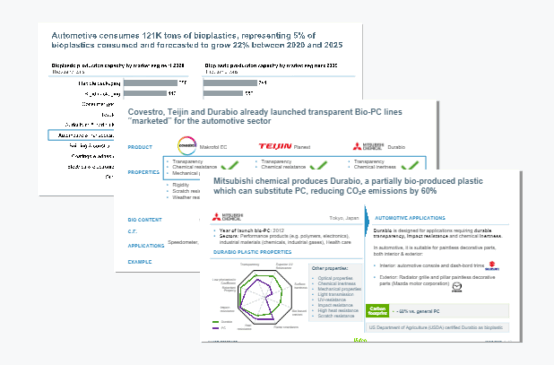
Substitution of PC, PA and PLA by bio-plastics, automotive sector
We conducted a technical assessment of the bio-plastic offer for the automotive sector to substitute PC, PA and PLA, benchmarked the providers and products currently available and checked the fit of their technical specifications vs. our client’s needs; we identified promising developments in this area and potential partners for sourcing bio-plastics at scale in the medium term.
Reduce: Market entry strategy
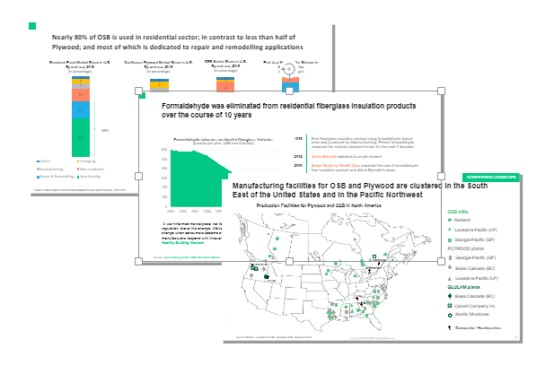
Entry strategy in the US and Canada for formaldehyde-free plywood
We conducted a competitive market study for the launch in North America of a new line of plywood not containing formaldehyde, a chemical element that has been deemed toxic for humans. First part was a classic market sizing, second part focused on regulation and customers interest for materials with safer content, and segmentation / prioritization of the potential end-markets.
Recover: Biomass opportunity mapping
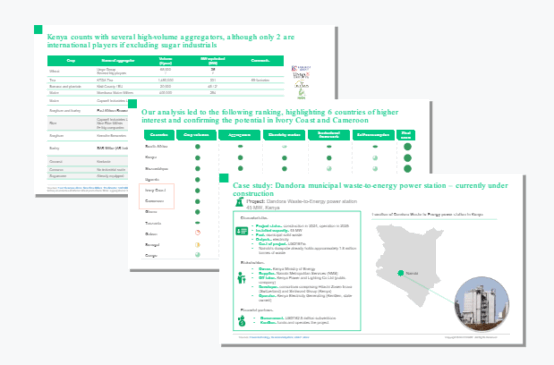
Opportunity assessment across 13 African countries for setting up biomass plants
After assessing which crops were suitable for thermal biomass, we evaluated for each country:
- Inputs potential, based on presence of aggregators and volume of waste currently handled
- Electricity market potential, based on electricity prices and ease of entering electricity market
- Institutional potential, based on interest of the government for biomass and presence of IPPs
Countries and partners were scored, and we introduced our client to 10+ potential industrial partners.
Repair: Repair market study
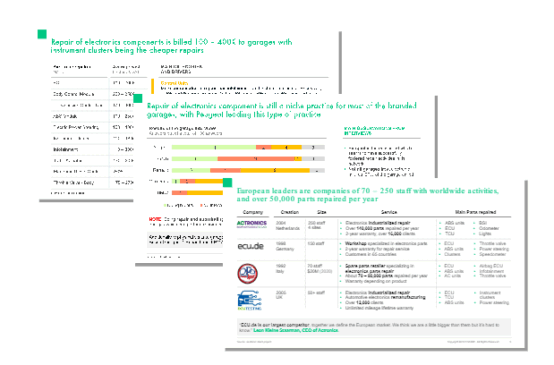
Market study of automotive electronics repair in Europe and US
We provided an overview of the main electronic parts currently in used in cars and trend for increase in their usage, and defined the concepts of repair vs. remanufacturing for this industry, then delivered:
- Competitive analysis: ECU repair businesses in EU / ECU remanufacturing businesses in the US
- Market sizing for Europe: volume of parts repaired annually and value of the market
- Repair shops survey for Europe: phone survey with repair shops of major 5 OEM brands
Repair: Eco-design value modelling
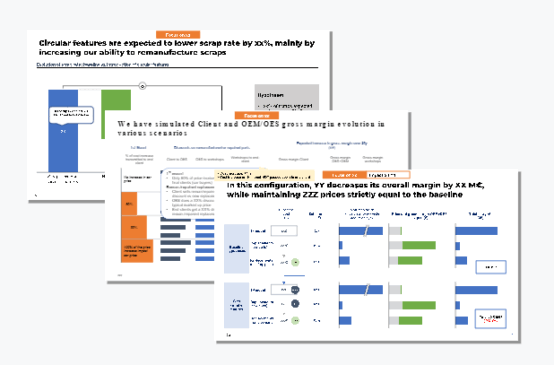
Modelling of distribution of costs and savings for eco-designed parts across the value chain
For three different parts, we modelled how to distribute the value / cost of an eco-designed version (= easier to repair) across the value chain, under scenarios of:
- Price increase: none, medium (+1%), steep (+2%)
- Discount on second-hand parts vs. new parts
- Public incentives on second-hand parts
- Margin adjustments of various stakeholders
Recycle: Scope 3 reduction strategy
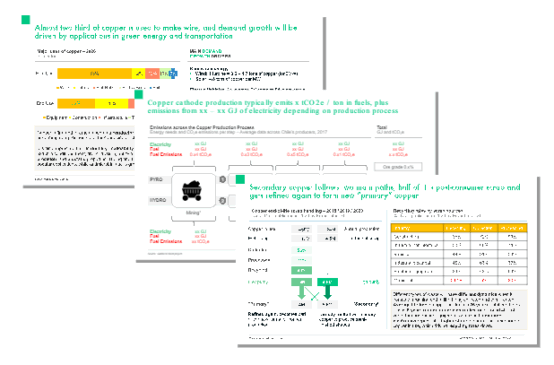
Lowering Scope 3 emissions of raw materials purchased through increased recycled content
For each of the 4 materials (steel, aluminium, copper and plastic), we:
- Mapped the main production processes and associated uses of energy
- Calculated emissions depending on process used, energy source, and electricity mix
- Identified relevant process changes, innovations or substitutions which could reduce emissions
- We conducted a deep-dive on increased recycled content, its feasibility, cost, and impact on quality.
Recycle: Textile recycling study
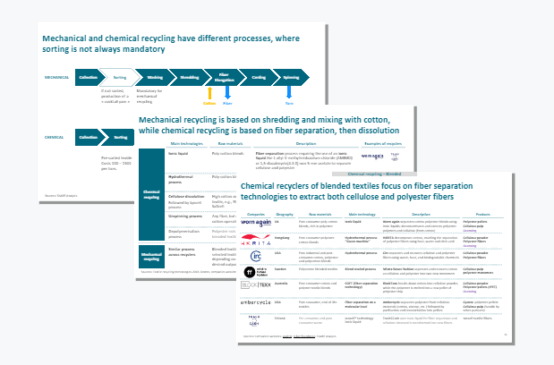
Technology assessment for textile mechanical and chemical recycling
We mapped the different processes for recycling textile, including mechanical recycling and 4 chemical recycling processes: (i) fiber separation with ionic liquid (ii) fiber separation with hydrothermal process, (iii) polyester depolymerization, and (iv) cellulose dissolution.
For each technology, we conducted a readiness assessment, modelled financing needs, operating costs and potential jobs creation, and evaluated its wider impact on the environment.
Strategy: Circular economy roadmap
Circular Economy Roadmap & Development of a Sustainable Portfolio Management Approach
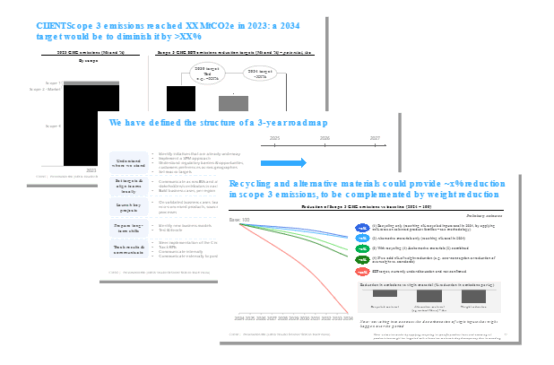
We assisted a player producing PVC, PP, PE, ABS products (e.g. pipes) in defining the pillars of their Circular Economy strategy, with a focus on GHG emissions reduction. We modelled the effect of various levers, such as integration of recyclate in eligible products, integration of bio-based materials or reduction of weight, on the overall emissions by 2034. We defined with them the structure of their roadmap to activate these levers
We followed up with a scoring of the innovation pipeline and a segmentation of the product portfolio using a Sustainable Portfolio Management approach
Strategy: Circularity KPI study
Benchmark of Circular Economy KPIs used at ComEx level in Fortune 500 Groups
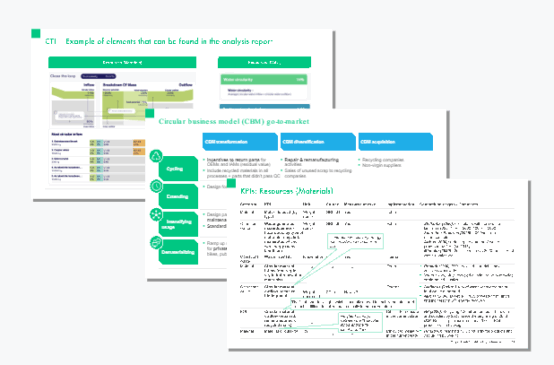
We elaborated a standard reporting framework for Circular Economy (CE) objectives jointly with the client and through various approaches:
- Review of ESG reports, KPIs used and CE targets of industry players
- Interviews of ESG executives from large automotive companies and industrials
- Internal interviews of client’s heads of BUs, R&D, innovation, ESG departments
Strategy: Car lifecycle analysis
Lifecycle analysis of passenger cars
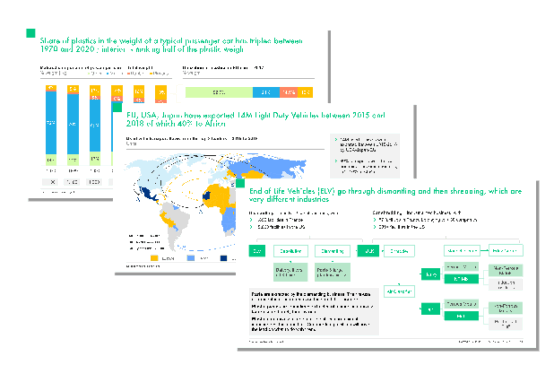
We mapped the full lifecycle of a typical passenger car in Western economies, from design and sale to dismantling and recycling materials. End-of-life was studied following two paths: (i) dismantling and shredding, and (ii) export to foreign countries. We collected data on vehicles exported and destinations, regulation pertaining to end-of-life in EU, parts extracted prior to shredding and their associated value, materials currently recycled; and conducted a deep-dive analysis on plastics recycling.
Finance: Circular financial models
Identification of financing models to support circularity in personal mobility, home goods & ITC
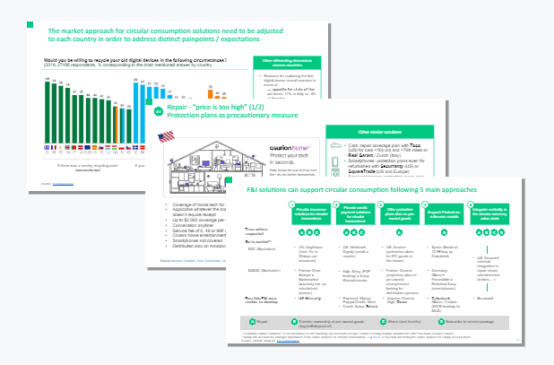
We screened publications and consumer surveys and interviewed 15+ C-levels executives in the sectors studied to identify obstacles to the development of circular models; through 20+ case studies of relevant offers from retailers, manufacturers, and the financial sector, we identified and classified potential solutions from the Finance & Insurance sector to overcome these obstacles.
CIRCULAR ECONOMY INSIGHTS
-
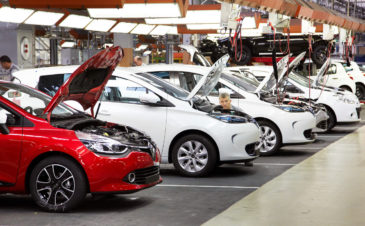
Europe’s Industrial Base Under Pressure: Why Circular Conversion Is Emerging as a Strategic Path for At-Risk Sites
European industry is entering a period of structural stress. Production volumes are declining, long-established plants…
-

Embracing remanufacturing and recycling: a strategic imperative for businesses
In recent years, the concept of the circular economy has gained significant traction as a…
-
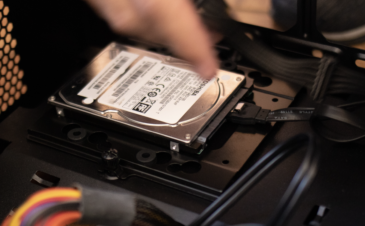
E-waste: how to stop the “tsunami” of discarded electronics rolling out over the world?
Electrical or Electronic Equipment (EEE) has drastically changed our daily lives over the past 50…